In the world of soccer, endurance training is vital for athletes aiming to enhance their performance on the field. The key to improving endurance is incorporating a mix of stamina drills that focus on speed, acceleration, and anaerobic fitness. For instance, shuttle runs are an effective exercise that players can do anywhere, helping to build both speed and endurance crucial for match situations.
Another critical aspect of soccer endurance is maintaining an optimal body weight, as excess fat can slow down the body and impede performance. Players should aim to achieve a body fat percentage of around 10% to maximize stamina and overall fitness. An intense daily routine, including 45 minutes of stamina exercises before training sessions, can significantly boost a player’s endurance over time.
Combining these targeted endurance drills with proper nutrition and weight management can lead to noticeable improvements in the athlete’s on-field stamina. By adopting these training methods, soccer players can develop the endurance needed to maintain high performance throughout an entire match.
Fundamentals of Soccer Endurance
Soccer endurance involves a balance of aerobic and anaerobic training to maintain high energy levels throughout a match. Oxygen plays a critical role in these processes, affecting how energy is sustained and utilized.
Aerobic vs. Anaerobic Training
Aerobic training involves exercises that increase cardiovascular endurance and the efficiency of the heart and lungs. This type of training includes long-distance running and steady-state cardio workouts. These activities improve the body’s ability to use oxygen efficiently, ideal for sustaining energy over extended periods.
Anaerobic training focuses on short bursts of high-intensity activity. Examples include sprinting, shuttle runs, and interval training. This method trains the muscles to perform in the absence of ample oxygen, essential for actions like quick sprints and sudden maneuvers during a game. By incorporating both types of training, athletes can enhance both their speed and endurance.
Understanding the Role of Oxygen in Endurance
Oxygen is vital for breaking down glucose into usable energy during aerobic activities. This process supports long-duration physical activities, helping to maintain stamina throughout a soccer match.
During anaerobic activities, the body’s demand for oxygen exceeds its supply. This leads to the production of lactate and the use of glucose without oxygen, allowing for quick energy bursts but resulting in faster fatigue. Efficient oxygen utilization is crucial for reducing fatigue and improving recovery times between intense efforts.
Combining aerobic and anaerobic conditioning can optimize an athlete’s overall endurance and performance on the field.
Designing an Effective Training Program
An effective soccer endurance training program balances intensity and volume while incorporating essential recovery periods. These elements ensure optimal development and performance improvement.
Balancing Intensity and Volume
Balancing intensity and volume in a training program is crucial for developing endurance. High-intensity interval training (HIIT) methods like shuttle runs or stop-and-go drills improve speed endurance and mimic the game’s anaerobic demands.
However, incorporating lower-intensity, high-volume sessions like long-distance running helps build overall stamina. Coaches should tailor the intensity and volume based on the athlete’s current fitness level, gradually increasing the workload to avoid overtraining and injuries.
Specific drills and exercises should be scheduled throughout the week, alternating between high-intensity and high-volume sessions to optimize endurance development.
Incorporating Recovery Periods
Incorporating recovery periods into a training program is essential for the physical and mental recovery of athletes. Adequate recovery prevents injuries and ensures sustained performance improvements. Structured recovery should include active recovery sessions such as light jogging or stretching and complete rest days.
Additionally, monitoring rest intervals within workouts, like ensuring sufficient cooldowns between HIIT sets, is crucial. Coaches should prioritize sleep, hydration, and nutrition as part of the recovery strategy. Using methods like the beep test can help in assessing recovery needs and tailoring the program accordingly, ensuring athletes are not overworked and maintain peak performance levels.
Balanced recovery principles facilitate continual adaptation and development.
Core Training for Soccer Stamina
Improving core strength and stability is vital for enhancing soccer endurance. A strong core supports overall body balance, improving performance during high-intensity match scenarios.
Targeting Core Stability and Strength
Core muscles, including the abdominals, obliques, and lower back, are central to maintaining balance and stability. Planks are an excellent exercise, offering versatile variations like side planks or plank rotations.
Strength exercises are also critical. Russian twists and bicycle crunches engage the obliques, enhancing rotational stability. Dead bugs and leg raises focus on the lower abdominals, crucial for maintaining posture during extended play.
Incorporating balance exercises such as single-leg stands on an unstable surface can further increase stability. These drills train the core to respond to erratic movements, mirroring unpredictable game conditions. Integrating these exercises into training routines can significantly elevate a player’s stamina and on-field performance.
Speed and Agility Drills
Enhancing speed and agility is key for soccer players to improve their overall performance on the field. This section covers two primary techniques: sprint training and agility drills with cones.
Sprint Training Techniques
Sprint training is essential for boosting acceleration and top speed. A popular method is interval sprinting. Players should perform multiple short sprints, around 20-30 meters, with brief rest periods in between. This helps improve both speed and anaerobic endurance.
Hill Sprints: Running uphill forces players to work against gravity, enhancing leg strength and sprint speed.
Resisted Sprints: Using parachutes or resistance bands can provide additional drag, which builds explosive power.
Runners should focus on maintaining proper form, keeping the body aligned, and using arm swings to drive momentum. These practices enhance quick bursts of speed needed during games.
Agility Drills with Cones
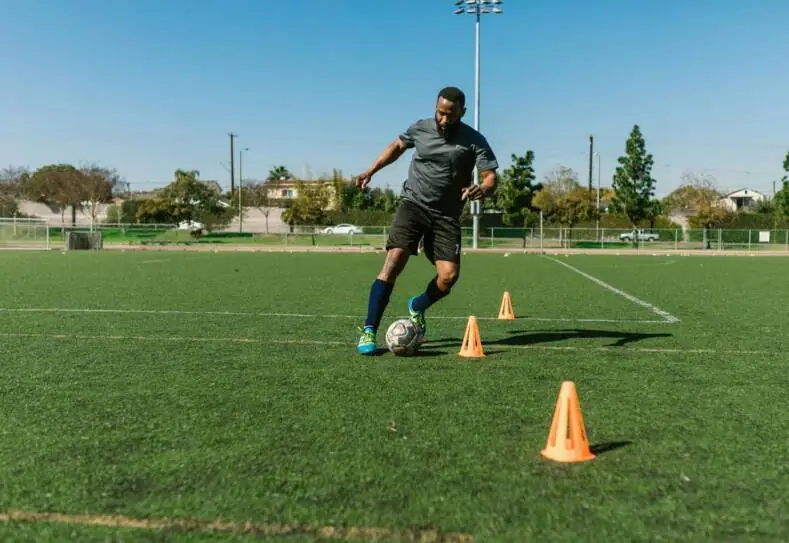
Cone drills are fundamental for developing agility and quick direction changes. Cone dribbling is a basic yet effective drill where players dribble a ball around cones placed one yard apart. This improves ball control and agility.
Shuttle Runs: Set up two rows of cones, and players run back and forth, touching each cone. This drill enhances acceleration and deceleration.
Ladder Drills: Although not cones, agility ladders can be included for variety. Players step quickly in and out of the ladder spaces, improving foot speed and coordination.
These drills help players mimic real-game situations where rapid changes in movement are required. Accurate and quick redirections can make a substantial difference in a player’s performance.
Soccer-Specific Endurance Exercises
To boost endurance in soccer, incorporating ball control and precise movement drills is crucial. Focus on exercises that combine dribbling, passing, shuttle runs, and swift directional changes.
Ball Control and Running
Ball control exercises that emphasize running are essential. One effective drill involves dribbling the ball for 30-40 yards, then transitioning into a sprint without the ball for an additional 30-40 yards. Players then turn and sprint back to the ball, continuing for another 30-40 yards of dribbling.
This drill not only builds endurance but also improves ball control under fatigue. Another valuable exercise is the one vs. one game on a long, narrow field, which promotes quick changes in direction and high-intensity bursts typical in match scenarios.
Shuttle Runs and Dribbling Drills
Shuttle runs integrated with dribbling exercises are fundamental in soccer endurance training. A useful drill consists of a 2 x 20-30 meter shuttle run with a deceleration followed by a one-touch pass at each endpoint. This drill mimics match conditions, requiring players to sprint, decelerate, control the ball, and pass rapidly.
These exercises enhance the player’s ability to maintain high-intensity performance throughout the game. Additionally, dribbling in quick succession over short distances, such as 10-20 meters, while incorporating swift directional changes, helps in improving both stamina and agility on the field.
Nutrition and Lifestyle for Peak Performance
Achieving peak performance in soccer isn’t just about physical training; it also requires proper nutrition and lifestyle habits. This means focusing on hydration, balanced diets, and adequate rest to ensure optimal preparation and recovery.
Hydration and Nutrition Tactics
Proper hydration is crucial for soccer players. Water and electrolyte balance directly impact performance and recovery. Athletes should drink water consistently throughout the day, not just during practices and games. Electrolyte drinks can be beneficial, especially when training in hot conditions.
Nutrition is another critical factor. Soccer players need a diet rich in carbohydrates for energy, protein for muscle repair, and healthy fats for sustained energy. Vitamins and minerals also play a significant role:
Calcium: Essential for bone health.
Iron: Helps carry oxygen to muscles.
Magnesium: Vital for muscle function and energy production.
Vitamin D: Supports bone strength and immune function.
B Complex Vitamins: Aid in energy production and recovery.
It’s also important to consume meals that combine carbs and protein within 30 minutes post-training to enhance recovery.
Importance of Sleep and Recovery
Sleep is a foundational aspect of athletic performance. Soccer players should aim for 8-10 hours per night to ensure their bodies and minds recover fully. Quality sleep helps in muscle repair and energy replenishment, both of which are essential for peak performance.
Recovery practices such as stretching, foam rolling, and cool-down exercises aid in reducing muscle soreness and preventing injuries. Incorporating days off and lighter training sessions allows the body to recuperate and adapt to the stresses of intense physical activity.
Incorporating relaxation techniques like meditation or deep-breathing exercises can further enhance recovery by reducing mental stress, ensuring players are mentally sharp and focused for their next game or training session.
Preventing Injuries and Sustaining Fitness
Effective endurance training for soccer players must address both injury prevention and maintaining a high level of fitness. Incorporating strategies to prevent injuries, alongside plyometric and flexibility workouts, helps achieve optimal performance.
Injury Prevention Strategies
Injury prevention is critical for soccer players. Gradual increases in workout intensity help avoid overtraining and reduce the risk of injury. It is recommended to train five to six days a week while incorporating one to two rest days.
Warm-up routines before practice or matches should include dynamic stretches to increase blood flow and loosen muscles. Common warm-up exercises include leg swings, arm circles, and light jogging.
Strength training exercises, such as the Nordic Hamstring Exercise, enhance joint strength and reduce the incidence of injuries. Eccentric exercises, which lengthen muscles under tension, improve muscle fascicle length and eccentric strength, lowering the risk of strains.
Cool-down sessions post-training should involve static stretching and light aerobic activity to aid recovery and maintain flexibility.
Plyometric and Flexibility Workouts
Plyometric exercises are essential for developing explosive power and improving coordination. These exercises include jump squats, box jumps, and lateral jumps, which help to enhance muscle power and control, mitigating the risk of injuries.
A well-rounded training program also incorporates flexibility workouts. Regular stretching exercises such as hamstring stretches, calf stretches, and hip flexor stretches improve range of motion and muscle elasticity. This reduces muscle stiffness and the likelihood of strains.
Yoga and Pilates can also be integrated to bolster core strength and flexibility, further supporting overall fitness and injury prevention. By dedicating time to both plyometric and flexibility training, soccer players can sustain high levels of performance and reduce injury risks.
Assessing and Tracking Progress
Evaluating endurance improvement in soccer players involves monitoring various physical and performance metrics, and adjusting training based on feedback can optimize results. Both aspects are critical to ensure players are improving effectively while minimizing the risk of overtraining.
Physical and Performance Metrics
Key metrics include VO2 max, which measures the maximum oxygen intake during intense exercise, and the lactate threshold, indicating the exercise intensity at which lactate starts accumulating in the blood.
Regularly conducting shuttle runs can evaluate speed and anaerobic capacity. Moreover, game day performance analysis, such as distance covered and sprints executed, highlights practical endurance improvements. Heart rate monitoring during and post-training sessions provides insights into cardiovascular efficiency and recovery.
Suggested Metrics:
Metric
Purpose
VO2 Max
Measures aerobic capacity
Lactate Threshold
Indicates endurance level
Distance Covered
Assesses game-specific stamina
Sprints Executed
Evaluates speed endurance
Heart Rate Monitoring
Tracks cardiovascular efficiency and recovery
Adjusting Training Based on Feedback
Training should be tailored using the data collected from regular assessments. If VO2 max tests reveal stagnant or declining results, aerobic exercises like interval training should be emphasized.
Observing low lactate thresholds might necessitate increased high-intensity interval training (HIIT) to enhance anaerobic capabilities. Game day performance metrics such as fewer sprints or less distance covered might call for more sport-specific conditioning drills.
It’s essential to adapt the training load management, considering players’ recovery rates and injury prevention. Incorporation of progressive overload—gradually increasing workout intensity—ensures continuous physical development while preventing overtraining.
Adjustment Strategies:
Interval Training: Increase for low VO2 max
HIIT: Boost for low lactate threshold
Game-Specific Drills: Enhance practical endurance
Recovery Protocols: Integrate to prevent overtraining
These strategies, combined with regular evaluations, help in building soccer endurance efficiently and sustainably.
Related Posts:
Endurance Training Drills Endurance training drills are essential for athletes looking to enhance their stamina…