Fitness ball stretches are a simple way to make any workout session more effective and comfortable. These stretches use the round, supportive surface of an exercise ball to help improve flexibility and balance. Stretching with a fitness ball can support the lower back, challenge the core muscles, and make daily movement feel easier.
Anyone can benefit from adding fitness ball stretches to their routine because the ball creates a gentle way to stretch muscles throughout the body. Many people find that the ball helps them keep good posture and target both upper and lower body areas with less strain. Using a fitness ball during stretching is also a helpful option for beginners or anyone wanting more support as they move.
Key Takeaways
Fitness ball stretches improve flexibility and balance.
They help support the body and make stretching easier.
These stretches can be added to any workout routine.
Benefits of Fitness Ball Stretches
Fitness ball stretches offer unique benefits for people wanting to build strength, improve movement, and help their body become more steady. Using a fitness ball can make regular stretches more effective by engaging more muscles at once.
Improving Flexibility
Using a fitness ball for stretching can help lengthen muscles in the back, hips, legs, and arms. The gentle curve of the ball allows for deeper stretches, which can boost joint range of motion. People often find it easier to stretch in comfort due to the ball’s support.
These stretches reduce muscle tightness, which may lower the risk of strains. Regular stretching with the ball can help people move more freely in daily life. Improved flexibility also helps make other exercises safer and more effective.
Key benefits:
Deeper, more comfortable stretches
Helps prevent stiffness
Supports easier movement
Enhancing Core Strength
Fitness ball stretches engage the core muscles, including the abs, lower back, and sides. When the body works to stay stable on the ball, these muscles must stay active and strong. This kind of activation is hard to get with floor stretches alone.
A strong core helps with sports, lifting objects, and sitting with good posture. Over time, core training with the ball can improve balance and reduce back pain. Building core strength also makes it easier to do daily tasks.
Main muscles worked:
Muscle
Example Stretch
Abdominals
Ball roll-outs
Lower back
Back extension on ball
Obliques
Side stretches over the ball
Improving Balance and Stability
Because a fitness ball moves, the body must use more than one muscle group to stay steady. This trains the body’s balance and makes supporting muscles work harder. Practicing balance on the ball can help improve coordination.
These skills are important for all ages, especially for older adults who want to prevent falls. Stronger stabilizing muscles can also help with sports and daily movement. Over time, these stretches can help people feel more confident moving in different directions.
Benefits for balance and stability:
Greater muscle control
Better posture
Increased body awareness
Essential Equipment and Safety Tips
Picking the correct exercise ball, setting it up properly, and following safety steps are important for a safe and effective workout. Careful choices prevent accidents and help ensure a comfortable, stable experience.
Choosing the Right Exercise Ball
The size of the exercise ball should match the user’s height. People under 5’4” often do well with a 55 cm ball, those between 5’4” and 5’11” may need a 65 cm ball, and taller individuals might require a 75 cm ball.
An anti-burst and non-slip design adds extra safety. Some brands clearly mark sizes by height range on the packaging. Testing the ball before use is useful—when sitting on it, knees should bend at a right angle with feet flat on the ground.
Choosing the right ball helps keep the body aligned and lessens the risk of slipping or injury. For those who want added stability, a ball with a textured or grippy surface can help prevent rolling during stretches.
Proper Ball Inflation
Proper ball inflation is necessary for both safety and performance. An under-inflated ball can reduce stability, while an over-inflated ball may burst under pressure. Most exercise balls have a recommended inflation range, usually printed on the packaging or included in the instructions.
To reach the correct firmness, inflate the ball until it feels firm but still has some give when pressed with your palm. Avoid using air compressors, as they might overinflate quickly. Use a hand pump and inflate in small bursts, checking firmness as you go.
Let the ball rest for 24 hours after first inflating, then top it off if needed. Do not exceed the weight limit given by the manufacturer, as this can damage the ball and create a safety hazard.
Safety Guidelines
Using an exercise ball involves a few best practices to keep workouts safe. Inspect the ball for holes, cracks, or worn spots before each use. Position the ball on a flat surface free from sharp objects.
Start new exercises slowly and avoid trying advanced moves if balance is an issue. Maintain good posture: keep the core engaged, back straight, and feet planted firmly.
Dress in comfortable, non-slip shoes or go barefoot for better grip if needed. Keep the ball away from heat sources or direct sunlight, as material can weaken over time. Supervision or assistance is suggested for beginners. Following these tips reduces the chance of falls or injury.
Fundamental Fitness Ball Stretches
Using a fitness ball can help stretch the body in ways that increase flexibility, improve balance, and support good posture. Each stretch targets specific muscle groups and promotes strong movement patterns.
Full Body Stretch Routine
A full body stretch routine with a fitness ball often starts with gentle movements that warm up the muscles. Exercises like sitting on the ball with feet flat on the floor can help center the body before deeper stretches.
A common method is to lie with the upper back on the ball and extend the arms overhead. This position stretches the chest, shoulders, and abdominal muscles while also engaging the back. To stretch the lower body, placing the legs in a wide stance and rolling forward over the ball helps open up the hips and hamstrings.
Key tips for a full body routine:
Start slowly and listen to the body’s limits
Hold each stretch for 15-30 seconds
Breathe deeply and evenly throughout
Incorporating the ball in these stretches helps support joints and encourages longer, more effective stretching sessions.
Trunk Rotations
Trunk rotations on the fitness ball improve flexibility in the lower back and sides of the body. Begin seated upright on the ball, feet flat, with hands on hips or crossing arms over the chest for balance.
Rotate the trunk gently to one side, keeping hips facing forward. Hold for a few seconds, then return to the center and rotate to the other side. Aim for 8-10 slow rotations each direction.
This stretch targets the oblique muscles and lower spine, which are important for daily movements and sports performance. Using the fitness ball also challenges balance and strengthens core muscles as the body stabilizes during the motion.
Posture Alignment
Fitness balls can help improve posture by strengthening the small muscles that support the spine. A basic exercise is to sit upright on the ball with the feet hip-width apart.
Focus on keeping the back straight, shoulders relaxed, and chin level. From this position, gently pull the shoulder blades together and hold for a few breaths. Try to maintain this aligned posture for several minutes without leaning forward or arching the back.
For additional support, wall-assisted exercises can be helpful. Sitting against a wall with the ball behind the lower back encourages correct alignment and teaches awareness of spinal positioning. Maintaining good posture habits in these stretches can carry over into daily life and reduce risk of back strain.
Upper and Lower Body Fitness Ball Stretches
A fitness ball can help people stretch large muscle groups with more support and balance. When used properly, it targets the back, arms, and lower body for a deeper stretch than many traditional floor stretches.
Upper Body and Back Stretch
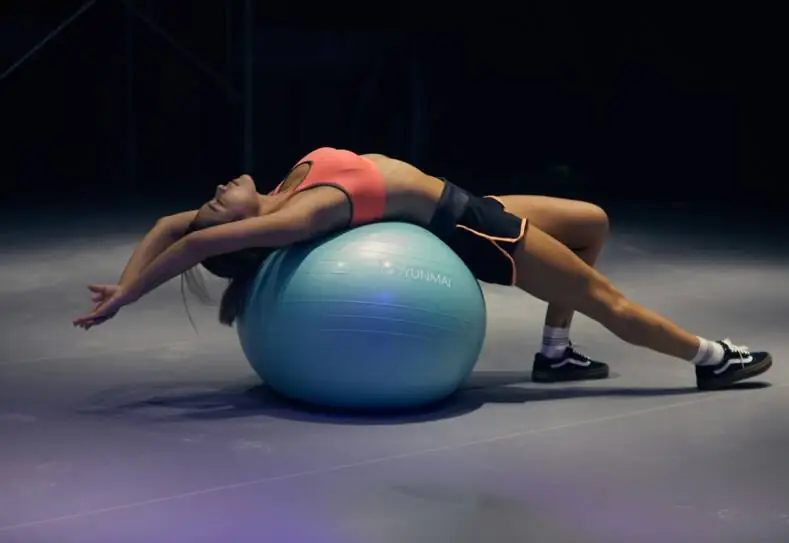
Using a fitness ball for the upper body and back can relieve tension and improve flexibility. One effective exercise is the back extension stretch. To do this, a person should lie face up with their upper back and shoulders resting on the ball, feet flat on the floor, and knees bent at a 90-degree angle.
They should then let their buttocks and hips sink toward the floor. This gently stretches the chest, abs, and back muscles. Arms can be extended out to the sides for a bigger stretch across the chest and shoulders.
Rotating the body slightly side to side adds a stretch to the sides of the torso. This stretch helps open up tight upper back muscles and encourages good posture.
Lower Body Techniques
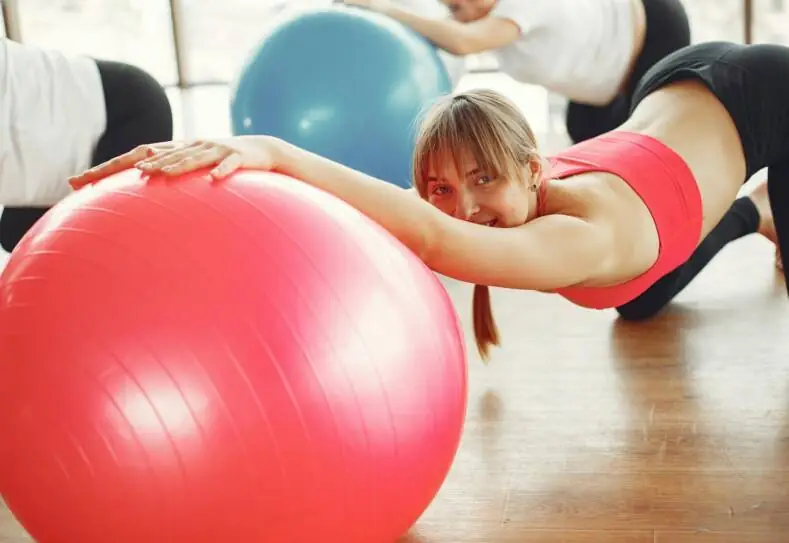
The fitness ball supports a variety of lower body stretches. Sitting on the ball and rolling forward can stretch the hips and thighs. Leaning forward as far as comfortable with feet wider than hip-width apart adds more stretch to inner thighs and hamstrings.
For the hip flexor stretch, they can kneel on one knee with the other foot forward and press their hips gently forward with the ball under the back leg. Holding this position for 20-30 seconds stretches the front of the hips and thighs.
They can then lie on their back with legs extended and heels on the ball, gently lifting one leg for a hamstring stretch. This targets the muscles along the back of the leg, increasing flexibility and helping with daily movements.
Hamstring Curl Using the Ball
Hamstring curls on the ball work both flexibility and strength. The person should start by lying flat on their back with heels and calves resting on top of the ball. Arms should be flat on the floor for support.
They will bend their knees and roll the ball toward their glutes by pulling with their legs. This movement contracts the hamstrings while still providing a stretch at the start and end of the exercise.
For better results, they can pause at the top before slowly rolling the ball back out to straighten the legs. Doing 8-12 controlled curls per set not only stretches but also strengthens the hamstrings and glutes. Regular practice may reduce muscle tightness and lower injury risk.
Incorporating Fitness Ball Stretches Into Workouts
Fitness ball stretches can make workouts more effective by helping with muscle strength, balance, and flexibility. They fit easily into strength training, standing routines, and core stability exercises.
Strength Training Integrations
A fitness ball can be used for both pre-workout stretches and as part of the main routine.
Key integrations include:
Hamstring Stretch: Lying on the floor, placing legs on top of the ball, and reaching forward to stretch the back of the legs.
Chest Opener: Sitting or lying on the ball and extending the arms back to stretch the chest and shoulders.
Squat Support: Holding the ball at chest level or placing it between the back and the wall for support while squatting.
During strength exercises like dumbbell presses or bicep curls, sitting on the ball activates core muscles. Moving with the ball also helps increase joint flexibility and coordination. This combination makes workouts safer and more efficient.
Standing Fitness Ball Stretches
Standing stretches with a fitness ball offer a chance to build balance and stability.
Common moves include overhead reaches, where a person stands tall and lifts the ball above the head. This stretches the arms, shoulders, and upper back.
Another stretch is to stand with feet apart and twist the torso side to side while holding the ball, which works the spine and oblique muscles. Small squats while holding the ball at arm’s length can stretch and warm up the lower body. These movements are helpful for keeping joints healthy and reducing the risk of injury.
Balancing Core Muscles Workouts
The ball is an excellent tool for targeting core muscles like the abs and lower back.
For example, a stability ball plank involves placing the elbows or hands on the ball, holding the body straight, and engaging the core. A bridge can be done by lying on the floor with feet on the ball, raising the hips, and keeping the core tight.
Russian twists—sitting on the floor with feet lifted and rotating the ball side to side—help with oblique strength. These balancing exercises train muscles to react and stabilize during daily activities and other workouts. Regular practice leads to better posture and stability.
Additional Resources and Visual Guides
Those wanting to learn more about fitness ball stretches can benefit from a mix of clear visual tools. Videos, stock images, and 360° images can each help in unique ways, whether a person is just starting or wanting to improve their form.
Instructional Videos
Instructional videos show each step for fitness ball stretches. Viewers can see how to position the body, control movements, and avoid common mistakes. Popular sources include YouTube channels and trusted health sites, many of which share guided routines for users of all skill levels.
Some videos include voice instructions and close-up shots on hand or foot placement. Others may use slow-motion clips or text overlays to highlight proper form. Trusted sites like Mayo Clinic offer video collections for core, balance, and flexibility exercises.
Video Features Table
Feature
Benefit
Step-by-step
Shows each part of the stretch
Slow motion
Makes form easier to copy
Pause/replay
Practice at one’s own pace
These videos are helpful for those who learn best by watching and following along in real time.
Stock Photos and Vectors
Stock photos and vector graphics give viewers still images of fitness ball positions. They are often used in print guides, online articles, or workout apps to provide a snapshot of each stretch. These images can be referenced easily and usually show a model performing the stretch with correct posture.
Vectors are helpful because they use simple lines and shapes. This is useful for step-by-step graphics, instructions, or posters found in gyms. Some stock photos may highlight key details such as hand placement, back alignment, or foot spacing.
Some tips for choosing useful images:
Look for high-resolution photos for clear details.
Select images with minimal background distraction.
Use vectors for educational posters or handouts.
360° Panoramic Images
360° panoramic images allow users to view a stretch from every angle. These images can be explored on computers or smartphones by dragging or tilting the device. Seeing different perspectives helps viewers check their own form against all sides of a model.
This resource is especially helpful for complex moves, where proper position matters most. Fitness websites and some stock image providers now offer interactive 360° views. Instructors sometimes use such images during online classes to help students correct themselves.
A 360° view can:
Show details hidden in regular photos.
Let viewers control what angle to see.
Aid in understanding whole body alignment during a stretch.
Frequently Asked Questions
Fitness balls can help with stretching, balance, and building strength. They are useful for people of different ages and fitness levels.
What are some effective lower back exercises using a fitness ball?
The back extension is a common exercise. The person lies face down with the ball under their hips and rolls up, lifting the chest off the ball. Another option is the bridge, where they lie on their back, place feet on the ball, and lift their hips up. Both exercises help support and strengthen the lower back.
Can you recommend stretches for beginners using an exercise ball?
Beginners can start with the seated torso stretch. They sit on the ball and gently twist side to side. Another beginner stretch is the child’s pose stretch. They kneel, roll the ball forward with their hands, and stretch their back and arms.
What are appropriate fitness ball exercises during pregnancy?
Pregnant individuals can try pelvic tilts by sitting on the ball and gently rocking the pelvis forward and back. Wall squats with the ball placed between the back and the wall offer support and are usually safe for most women. Stretching the upper back by leaning forward onto the ball can also help with comfort.
What are suitable fitness ball stretches for the elderly population?
Gentle seated marches allow the elderly to remain balanced while moving their legs for flexibility. Chest openers, where they sit on the ball and open their arms wide, help stretch the upper body. All stretches should be slow and controlled to avoid injury.
How can an exercise ball be used to improve hip flexibility?
Using the ball for hip circles helps loosen the hip joints. The person sits in the center of the ball and slowly moves hips in a circular motion. Hip flexor stretches can also be done by kneeling in front of the ball and leaning the hips forward while resting hands on the ball.
Are there specific fitness ball exercises that can aid in reducing belly fat?
Using the exercise ball for crunches targets abdominal muscles. The person sits on the ball, walks their feet forward, and leans back to do a crunch. Plank holds with hands on the ball can also engage the core. Regular exercise with a balanced diet is needed for fat loss.